
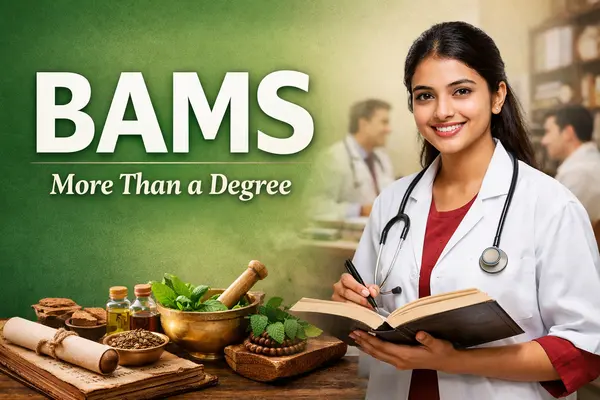
For many students, the dream of entering the medical field begins with a desire for stability, respect, and a secure future. While these reasons are understandable, they are not enough when it comes to choosing BAMS. This course is not meant to be selected casually or treated as a backup option. BAMS represents a commitment to Ayurveda, a system of medicine that focuses on balance, prevention, and holistic healing.
Students who enter BAMS without understanding its depth often feel confused or dissatisfied. In contrast, those who choose it with clarity discover a profession that shapes not only their career but also their mindset, discipline, and sense of responsibility. Ayurveda is not about shortcuts or quick results. It is about understanding life in its entirety and helping others achieve long-term well-being.
At merishiksha.org, students and parents are encouraged to explore these realities before making a life-changing academic decision.
BAMS is not just about earning a medical qualification. It is about developing the mindset of a healer. Students are trained to see the human body as an interconnected system where physical health, mental state, lifestyle, and environment influence each other.
This perspective changes how students think and live. Daily routines, habits, and values begin to align with principles of balance and discipline. Over time, BAMS becomes less of a course and more of a way of life.
Students who choose BAMS only because other options did not work out often struggle to stay motivated. Ayurveda demands respect for its principles and patience with its learning process. When chosen consciously, BAMS offers deep professional satisfaction and a clear sense of purpose.
Ayurveda cannot be mastered through rote learning. Concepts such as body constitution, disease progression, and treatment planning require interpretation and application. Students are trained to think critically, analyze patterns, and understand root causes rather than memorize definitions.
This style of learning builds confidence and prepares students to handle real-world clinical situations with clarity.
Clinical exposure is a defining aspect of BAMS education. Students interact with patients, observe senior doctors, and gradually take on responsibilities. These experiences teach empathy, accountability, and ethical conduct — qualities essential for any healthcare professional.
BAMS places strong emphasis on observation, touch, and structured questioning. Students learn to identify subtle signs and symptoms that often go unnoticed. This sharpens analytical thinking and improves diagnostic accuracy.
Ayurveda does not follow a single treatment approach for everyone. Students learn to design individualized treatment plans based on body constitution, lifestyle, mental state, and environmental factors. This holistic thinking strengthens clinical judgment.
Ayurvedic practice often involves long-term patient relationships. This encourages responsibility and trust. Students learn that effective treatment is not only about medicines, but also about guidance, follow-up, and lifestyle correction.
Ayurveda teaches that a doctor must first be disciplined personally. Students naturally develop structured routines, better time management, and awareness of healthy habits. These qualities support both personal growth and professional credibility.
BAMS graduates are often looked upon as wellness guides within their communities. People seek advice not only for illness but also for prevention and lifestyle improvement. This role requires integrity, honesty, and continuous learning.
The BAMS curriculum integrates classical Ayurvedic knowledge with foundational modern medical sciences. Students study subjects related to anatomy, physiology, pathology, pharmacology, and clinical medicine alongside traditional Ayurvedic principles.
This balanced structure helps students understand health and disease from multiple perspectives. As the course progresses, the focus gradually shifts from theory to clinical application, preparing students for real-world practice.
While academic eligibility is important, mental readiness plays an equally crucial role in success. Students must be prepared for extensive learning, clinical exposure, and continuous self-improvement. Those who enter with realistic expectations adapt better and grow consistently.
Proper counseling before admission helps students understand whether BAMS aligns with their interests, strengths, and long-term goals.
Choosing BAMS requires patience, curiosity, and responsibility. Students must be comfortable with gradual progress and willing to invest time in understanding concepts deeply.
Curiosity strengthens learning. Ayurveda encourages students to ask questions, observe carefully, and reflect on clinical experiences. This habit builds strong diagnostic reasoning.
Responsibility develops early. Students learn that their decisions affect patient outcomes, which fosters seriousness and ethical awareness. Platforms like merishiksha.org help students assess this mindset before committing to the course.
Many graduates establish private clinics or work in hospitals. With consistent practice and patient trust, professional growth becomes steady and sustainable.
Students interested in advanced learning can pursue postgraduate studies in specialized Ayurvedic disciplines, leading to academic or advanced clinical roles.
BAMS graduates who enjoy knowledge sharing often choose teaching or research, contributing to the preservation and development of Ayurveda.
The growing focus on lifestyle management has increased demand for Ayurvedic professionals in wellness programs and holistic health initiatives.
BAMS offers long-term stability for those who remain dedicated. Growth in Ayurveda is gradual but lasting. Reputation builds through experience, ethical practice, and consistent results rather than quick recognition.
This steady progression provides professional security and social respect over time.
Scope depends on dedication, skill development, and continuous learning. Passionate practitioners build strong and respected careers.
Ayurveda focuses on prevention and balance, making it highly relevant in modern lifestyle-related health concerns.
Treating BAMS as a backup leads to dissatisfaction. Choosing it consciously leads to fulfillment.
Parents influence career decisions significantly. Understanding Ayurveda helps parents support their children with confidence rather than doubt.
Encouragement during challenging academic phases strengthens motivation. When parents view BAMS as a meaningful career rather than a compromise, students feel emotionally supported.
Resources available through merishiksha.org help parents gain clarity about course structure and long-term prospects.
Many students struggle because they enter BAMS without understanding its demands. Career guidance aligns expectations with reality, reducing confusion and regret.
Meri Shiksha helps students and parents explore course details, career paths, and personal suitability before making decisions.
BAMS is not about quick success or temporary recognition. It is about service, responsibility, and lifelong learning. Students who embrace Ayurveda’s philosophy find meaning beyond financial rewards.
This balance transforms a profession into a purposeful journey.
What is the real purpose of choosing BAMS as a career?
The real purpose of choosing BAMS is to become a holistic healthcare professional who focuses on prevention, long-term wellness, and ethical patient care rather than quick symptom-based treatment.
Is BAMS suitable for students who only want a medical degree?
BAMS is not suitable for students who only want a degree, as it requires patience, discipline, and genuine interest in Ayurveda to succeed and feel fulfilled.
What skills does a BAMS student develop during the course?
A BAMS student develops observation skills, clinical judgment, communication abilities, ethical responsibility, and a holistic understanding of health and disease.
Are there good career opportunities after completing BAMS?
Yes, BAMS graduates can pursue clinical practice, higher studies, teaching, research, wellness consulting, and preventive healthcare roles.
Why is guidance important before choosing BAMS?
Guidance helps students understand course demands, career scope, and personal suitability, reducing confusion and long-term dissatisfaction.
How does Meri Shiksha help BAMS aspirants?
Meri Shiksha provides reliable information and career clarity through merishiksha.org, helping students and parents make informed decisions.
BAMS is not a shortcut or a second choice. It is a responsibility toward society and oneself. Students who choose this path with understanding build meaningful careers rooted in service, trust, and stability.
With the right mindset and informed guidance from Meri Shiksha, BAMS becomes more than a profession — it becomes a calling that shapes your life.